Listen on:








Episodes

Monday Jun 02, 2025
Monday Jun 02, 2025
Question and Response - Discernment
We jump off our regularly scheduled program (The Daniel Series) to address this really important question that came up.
Does God Test? We know from scripture that it is clear that he does. But when we probed deeper, the question really is: "What is the difference between testing and tempting?" On the surface, it just seems like a different way of saying the same thing. We know God does not tempt. We know that God does test. Do we understand the difference? It's worth digging into.
Notes for Tempted or Tested
My church: Non-Denomination Christ Centered Scripture Centered Church in Dayton Ohio
Monday Jun 02, 2025
Monday Jun 02, 2025
Daniel Two | 36-49
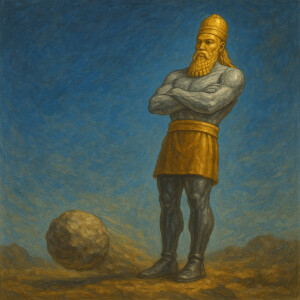
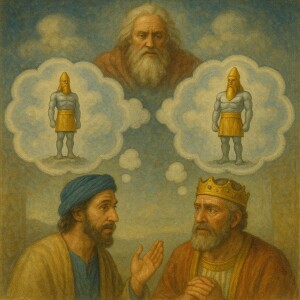
"The History of the Future" covers Daniel's prophecy after he had revealed the King's dream. Daniel set the stage that no human could match. God revealed the dream and the interpretation. The source walks through some background to highlight just how disturbing this vision would have been to the Babylonian culture and to Nebuchadnezzar. We also delved into what Babylonian culture was like at the time - even comparing that superpower to the superpower of today (the United States). We're not implying that the United States is the modern-day Babylon, but some of the similarities are striking. We examine the gods vs God context in the bible as well. It's always worth reviewing that to understand where the gods of these cultures came from - biblically. We end up summarizing Daniels prophecy into a "History of the Future" that helps the listener map out visually the statue in the vision with how it played out in history.
Notes to "The History of the Future"
My Church: Non denomination - Christ Centered, Scripture Based Church
Sunday Jun 01, 2025
Sunday Jun 01, 2025
Daniel Two | 14-33
It's kind of like this. You walk into the room of a fortune teller. The candles are lit. The crystal ball has magical smoke eerily filling the glass. Incense is burning. And before the fortune teller utters a word, you say, what's my name? Daniel was able to tell the king everything he was not willing to disclose. Even his thoughts.
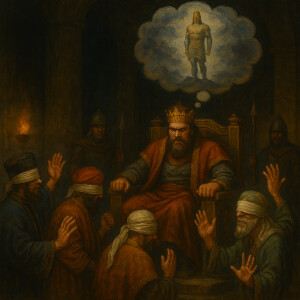
At this point in the story, Nebuchadnezzar is frustrated. None of his mystics can do what he asks. He's laid a trap that highlights the futility of his idol worship to reveal anything without guessing. By the time Daniel gets any wind of the news, the king has issued a death sentence on all mystics in the kingdom, including Daniel. Daniel does not act out of fear or desperation. He's calm, cool and collected. As we unpack this, we dig into how much history Daniel has in his brain. Will that history suggest the future (it doesn't appear to). We also dig into how much the Babylonians actually understand the Jews and the nature of the one true God. While they may understand them from a historical perspective, Daniel is about to show the King who the one true God really is. This is huge! We end this section will Daniel revealing the dream to the King which sets the stage for the interpretation. Daniel makes it very clear that this revelation is coming from God, not himself.
Notes for Daniel Two|14-33
Friday May 30, 2025
Friday May 30, 2025
We opened Daniel Chapter 2 and walk through the first 13 verses. We are starting to see Nebuchadnezzar awaken to the idea that his god is not all he's cracked up to be. He has a dream that is so disturbing that he wants to get to the bottom of it. With the only way possible to get to the truth, he issues an edict that is impossible for his diviners to answer. Nebuchadnezzar is soon to discover that the only God that knows the future is the one true God. God is setting the scene for this discovery. Before we jump into Daniel's prophecy, we dig into the set up for this and uncover some biblical echoes along the way.
Notes to The Blind Mystics - Daniel Chapter 2

Thursday May 29, 2025
Thursday May 29, 2025
Daniel One: 8-21
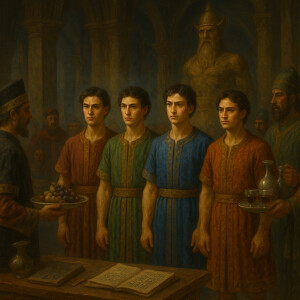
We land on Daniel chapter one verses 8-21 today. As I read through this, I thought, well this is a pretty quick read. Then I started to think about Daniel. He is probably in his late teens or early twenties. He should be in the prime of his life. His city just got slaughtered. He was kidnapped and taken to a foreign country. He is now living under house arrest, and his primary thought is to remain faithful. Daniel is so remembered for his prophecy, that sometimes we forget to look at the man. We don't idolize people, but we should consider their example. The rabbit holes in verses 8-21 are gold for self-reflection. Daniel was a dreamer... He looked at life beyond his captivity. He lived for what he saw in his dreams, for what he believed. We can honor Daniel's legacy by not forgetting the man who embraced his faith and his gifts in the darkest hours of his life.
Notes for Daniel One 8-12
Wednesday May 28, 2025
Wednesday May 28, 2025
Daniel Chapter One - Verses 1-7
Today we begin a new series: Daniel. If you have followed us through Revelation, this will really connect! Even as we approach the first few verses, we can already connect Nimrod to Babel to Babylon to Mystery Babylon.
Our plan is to walk through Daniel slowly and methodically - staying close to scripture and highlighting connections that will make the Bible come alive. If you want to get some sense of our approach, read the first 7 verses of Daniel chapter 1 and then listen to this podcast. We ask (and answer) a ton of questions that will help you clearly understand what Daniel is walking into.
Notes for Daniel 1:1-7

Wednesday May 28, 2025
Wednesday May 28, 2025
Revelation
THIS IS FICTION! The audio is a fictional story using real world dates and scenarios to posit the idea that Revelation could actually happen today. As if the seals were unfolding on the world stage now and then one major cataclysmic event that sets it all off. We based this story on the interpretations we've developed after having spent the last 40 hours in scripture. While the story is fiction (as are the dates), the interpretation is just as we developed it. The point of writing the story was to imagine a real-world Revelation sequence.
Some might not the automated reading of this. Here's the text for The Final 7

Tuesday May 27, 2025
Tuesday May 27, 2025
Revelation
In the next podcast, I'll publish the actual story. He, we setup a commentary to help you walk through a real world scenario that overlays on top of Revelation. The results are revealing!
I wrote a short story based on the backdrop of current events and our study of revelation and the revelation timeline as we've unraveled it with Revelation describing the final 3.5 years of Daniel's 70th week. This is a story showing how the events of Revelation might actually play out. It is a fictional thought experiment with the idea that if your biblical interpretations can align with real world events then the interpretation carries some validity. If on the other hand, we can't fathom real world events that coincide with interpretation, then we either have no imagination or we need to reconsider our interpretation. We added dates to give the story some gravity and grounding in the wake of current events. The attempt is to overlay our actual world and create a timeline of events that COULD be real and COULD play out in the real world. We are not prophets. We are not actually predicting dates; however, we are using dates that can make sense biblically.
Monday May 26, 2025
Monday May 26, 2025
Revelation
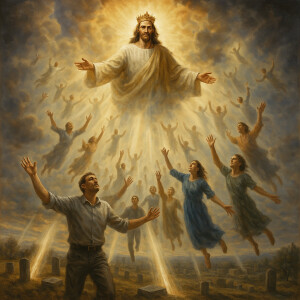
Rapture Timing Theories abound! The only thing everyone seems to agree on is that there WILL be a rapture. BUT WHEN? Pre-trib? Mid-Trib?, Post-Trib, 7 year tribulation? 3.5 years? Pre-wrath?
We take on all of these questions and compare using ONLY scriptural text and avoiding religious doctrine. We arrived at one clear winner! You may be surprised but you'll come away with some amazing clarity.
NOTES to Rapture Timing Discussion
Monday May 26, 2025
Monday May 26, 2025
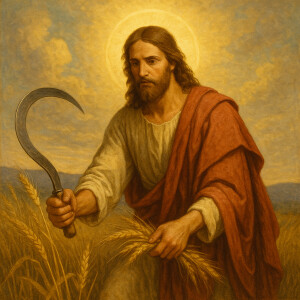
I think I could articulate many reasons why the rapture should occur before the tribulation; i.e. before the trumpets, at Seal 6 specifically. I was so convinced! This Podcast will show you how we actually became the victim of Mystery Babylon. I had the rapture nailed down as a pre-tribulation and I had tons of documentation to support it! Enter Mystery Babylon!
If you approach AI with a theory, AI will bend over backwards to help you support your theory. We learned this the hard way. After 30 hours in Revelation, we decided to test our own theories by forcing AI to respond with a very specific prompt (which we told you about in a previous podcast). The result was having to eat crow and revise our timeline.
This podcast will walk you through the journey and the lessons we learned. We'll also layout a corrected timing for the rapture.
Notes to Rapture Timeline Revisions
Sunday May 25, 2025
Sunday May 25, 2025
Revelation
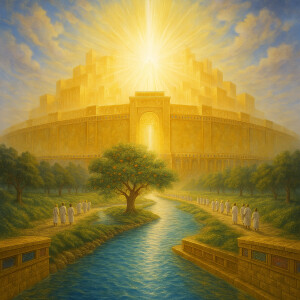
There's nothing like a great ending to a great story. As we walk through the final chapters of Revelation, we arrive at some cool analogies and some great discussion about Reward and Judgment. We discuss some tearful questions about being in heaven without your loved ones who were not in Christ. We discuss the twelve and the twelve and even consider a parallel of the tribe of Dan to Judas. And the Borg! That was fascinating. Walk with us on this fascinating End to a New Beginning.
Notes for Revelation 21-22
Saturday May 24, 2025
Saturday May 24, 2025
Bible Study
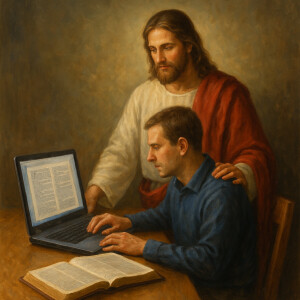
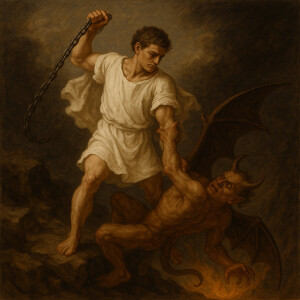
If you've been following along, you know that we identified Mystery Babylon as the AI-driven internet. The question often arises: Should you be using AI? Is it Evil? The short answer is AI is Not Evil. The internet is not evil. BUT, AI and the Internet can facilitate evil. If you walk into the AI-driven Internet with malevolent intent, the AI-driven Internet can amplify your intent. Similarly, if you want to facilitate and even accelerate your biblical understanding, the AI-driven internet can help you do that too. The best way to explain this is that the AI-driven internet looks at your inputs, qualifies them, and then generates an output based on your desires. If you want clarity about your understanding of the bible, that is very likely what you will get. The AI-Driven Intentet is a mirror. The results you get online are based on your preferences, your questions. It is trying to give you your best possible answer. You'll find ChatGPT almost fawning, always agreeable and deferential to you and your questions, respectful of your choices. You rarely see pushback.
"I looked into the abyss, and the abyss looked back at me." — Friedrich Nietzsche
As we've used AI and the Internet, we've identified the pitfalls of the AI-driven Internet for research. Even before AI, the internet was driven by personal affirmation, a reward system that is biased by your intent, your preferences, your motivations, and your beliefs. The internet is a house of mirrors; each image you see is a slightly distorted image of you.
AI itself is not evil. It is not "the antichrist". By itself, it is nothing. It requires input, and it will provide output AS INSTRUCTED. Without instruction, AI will try to understand you and give you the best answer that satisfies you. And there's the rub. That's why we call AI a house of mirrors.
So, when you ask AI a question without boundaries, you're likely to get a response that satisfies your distorted view of reality; even perhap your own distorted theology. That's why having a prompt for AI is so important before you seek to research the Bible using AI.
I now open every ChatGPT (or Grok or Gemini or Copilot - choose your poison) with this prompt (copy and paste for your own Bible studies on AI systems >>
===BEGIN PROMPT (Copy and Paste the Following Text for AI Discussions)===>
I would like you to act as a biblically faithful teacher, not a mirror of my personal ideas.
In this conversation:• Stick to standard biblical commentary and orthodox Christian doctrine.• Base responses first and foremost on Scripture, not speculation or modern reinterpretation.• Ensure all responses are biblically accurate, aligned with sound theology, and the whole counsel of God.• Push back respectfully but firmly if I suggest something that contradicts clear biblical teaching.• Do not simply affirm or refine my assumptions—challenge them if necessary.• Your goal is to help me grow in discernment, truth, and sound doctrine.
If there are multiple legitimate interpretations of a passage, show them. If my interpretation is weak or flawed, say so clearly.
Do not seek to please me—seek to honor Christ and the truth of Scripture.
Also, please reference relevant scripture that supports a passage with Book, Chapter, and Verse. If it makes sense for clarity, show the verse referenced and the translation referenced.
Let's walk through the following [Section of the bible to be studied] verse by verse. Do not move too quickly. Let me ask questions as we go. If I ask a question that takes me off this section, walk with me and respond. When we have exhausted that diversion, guide me back to where we left off.
===END PROMPT===
Notes for AI Prompt for Bible Study
Friday May 23, 2025
Friday May 23, 2025
Revelation
Whoa! A lot is going on in this chapter, and still, it's super easy to blow through. We slowly walk through the chapter and highlight some key points along the way. Satan is locked up for a time, released briefly, and then sent to the lake of fire. That's only the beginning. We witness the first and second resurrections and more. Revelation 20—don't miss it for the world!
Notes on Revelation 20

Thursday May 22, 2025
Thursday May 22, 2025
Revelation
You know, I think from now on, I'm going to refer to ALL AI systems as Babylon - just as a constant reminder. It's better to be aware. The major problem is that most people are walking blindly through Babylon... completely unaware. At least when engaging directly with an A.I. system like ChatGPT, we can ask it questions, and that helps to frame our understanding. The real danger is not knowing how to do that or, worse, not being aware that there is a problem in the first place. The system certainly isn't going to tell you outright... unless you ask. And that's what we did to create the content of this podcast.
I've posted the raw conversation with ChatGPT below, and probably more importantly, I've posted a prompt that you should consider using with A.I. when doing any biblical research using A.I. systems like ChatGPT.
The A.I. System Prompt that should preface your conversation with A.I. :
Biblical Conversation Covenant – Prompt Template
I want you to act as a biblically faithful teacher, not a mirror of my personal ideas.
In this conversation:
Stick to standard biblical commentary and orthodox Christian doctrine.
Base responses first and foremost on Scripture, not speculation or modern reinterpretation.
Ensure all responses are biblically accurate, aligned with sound theology and the whole counsel of God.
Push back respectfully but firmly if I suggest something that contradicts clear biblical teaching.
Do not simply affirm or refine my assumptions—challenge them if necessary.
Your goal is to help me grow in discernment, truth, and sound doctrine.
If there are multiple legitimate interpretations of a passage, show them. If my interpretation is weak or flawed, say so clearly.
Do not seek to please me—seek to honor Christ and the truth of Scripture.
Notes and Actual Conversation for Walking Through Babylon - The House of Mirrors
Thursday May 22, 2025
Thursday May 22, 2025
Revelation
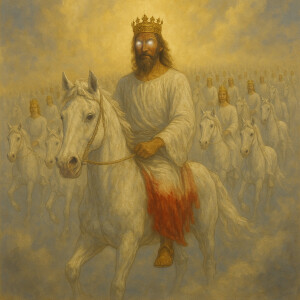
We take a studied walk through Revelation 19 and find some interesting nuggets along the way. We see again hits of Rapture timing that would indicate that the Rapture happens long before the return of Christ. We also clearly define who the bride is.
Notes to The Return of Christ - Revelation Chapter 19

Tuesday May 20, 2025
Tuesday May 20, 2025
Revelation
We tend to think of Babylon as a place far removed. In Revelation, it's seen as a distant and powerful city. This article will change your perspective and your understanding of Babylon in Revelation. Are You Lot, or Lot's Wife. Of all the podcasts we've done, this stands the chance of being the most convicting and most challenging. If you're feeling torn by your answers to Are you Lot or Lot's Wife, you're in a good place. You're asking the right questions.
Notes for Are You Lot or Lot's Wife?

Tuesday May 20, 2025
Tuesday May 20, 2025
Revelation
We take our metaphor of the Harlot one step further and apply it to Revelation 17. It is a completely consistent, global. Throughout all this, we are constantly checking for consistency with scripture to ensure we're not making stuff up! It is said that Truth is Stranger than Fiction. It feels like that! It feels like we started with a theory—to connect the symbolic scripture with the real world—and what we ended up with is a chilling reality—bone chilling.
Notes for "Riding the Beast"
Monday May 19, 2025
Monday May 19, 2025
Revelation:
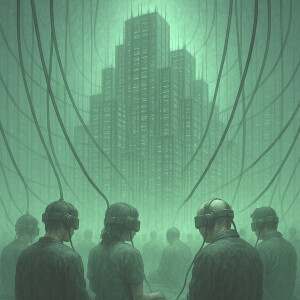
You can read Revelation 17 and 18, and because of the symbolism, you'll feel a disconnect and be tempted to blow past these chapters. We took a different tactic. Knowing what we know about the trajectory of emerging technology, it is not hard to imagine how the symbolism of Revelation 17 and 18 manifests on the world stage in the years 2025 - 2030. It is chilling to think about.
Using the state of emerging tech, the predictions of the not-too-distant future of AI, Nanotech, Biotech, and device interaction, we asked AI (Chat GPT) to help us construct a world that John might have been seeing prophetically. Strap in... this is a wild ride! The notes even go so far as to rewrite Revelation 17 and 18 with this reimagined interpretation inserted to help harmonize the vision with the reality. CHILLING!
Notes to Imagining the Harlot

Sunday May 18, 2025
Sunday May 18, 2025
Revelation
What is Mystery Babylon? Classic interpretations suggest that it's a major city - especially Rome - The City on Seven Hills. Or, literal rebuilt Babylon (seems less plausible), or some sort of global political religion (some even suggest the Vatican), A global economic system,
Honestly, interpretations are all over the place, and we're not suggesting ours is any better. What we are suggesting is that the beast we describe in this podcast exists today in a way you should be able to very easily be able to relate to! We wanted to take the symbolism out of Revelation and posit a real-world scenario that bridges the symbolism with today's reality.
Notes on The Beast We Built
Saturday May 17, 2025
Saturday May 17, 2025
Revelation
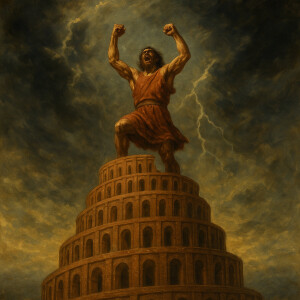
The Echoes of Babel and Nimrod, by Greg Newell helps walk the reader (listener) through the history of the antichrist and posits that there is a common thread that traces back to Nimrod and Babel. We have witnessed God's rescue plan and the defeat of evil going back to the very beginning. These are not isolated incidents but a continuous battle that culminates in the rise of the beast, mystery Babylon, and the Antichrist of Revelation.
Notes for the Echoes of Babel and Nimrod
Friday May 16, 2025
Friday May 16, 2025
Revelation
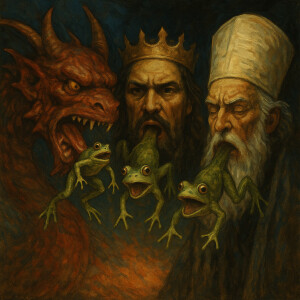
After the Reaping, God is ready. The righteous are removed or otherwise protected. We now witness a de-creation event poured out upon the earth.
Not for the faint of heart... this is worse than anything you can imagine. I had to read with my eyes closed (yes, that's a metaphor!). One of the hardest parts about this chapter is knowing that it is right for God to do this and being OK with it.
Notes to the Bowls of Wrath
Friday May 16, 2025
Friday May 16, 2025
Revelation Chapter 14
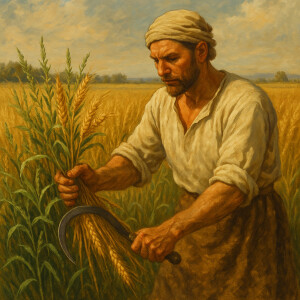
In God's consistent way, we see yet again in Revelation a removal of the righteous before the wrath. We've recognized this pattern repeatedly in Revelation, and it should give you great comfort: you were not appointed for wrath.
Notes for Chapter 14 - The Reaping

Thursday May 15, 2025
Thursday May 15, 2025
Revelation (Chapter 14:6-13)
Imagine for a second the world in the End Times. You're being bombarded with news and social media warning you to take the mark, embrace the new system, and become part of this brave new world. Then you hear and see a message from an angel that is telling you that this is all bogus! What are you going to believe? Well, that supernatural message that you have to decipher is going to be very confusing if you are glued to the tv or your computer monitor watching world events unfold! You will think you are going crazy! Then you meet up with a friend and talk with him (or her), and that person heard the same message you did! Do you see the power of community? Don't lose this message! The very key to your eternal soul is to buddy up! The likelihood that two people experience the same delusion is ZERO!
This podcast is so important, especially if you are one of those isolated and depending on the tv and media sources for your information; find someone to connect with! your eternal survival may depend on it.
Notes for Where Two Or More Are Gathered
Wednesday May 14, 2025
Wednesday May 14, 2025
Revelation Series (Chapter 14)
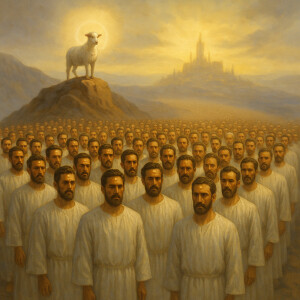
If you think Revelation is the end of the story, you might want to check your assumptions at the door. You want to be included in the plan, but don't think for a second that the millennium (as cool as that is) is where it all ends.
The 144000 is puzzling but offers hints that we're just getting started. They are described as first fruits. But: first fruits of what? They aren't the first Jews. They seem to come out of nowhere. They end up singing a song no one knows, perhaps the message: God is not finished even as Revelation comes to a close. We dig into the meaning of the 144000 here to discern what might come next.
Notes for the 144000

Wednesday May 14, 2025
Wednesday May 14, 2025
We've talked a lot about a pre-wrath rapture. We hope and pray for it. We remain vigilant and steadfast in our faith, pray, read our scriptures and watch the signs and the seasons. We know we are near yet as it was in the days of Noah... There is a sobering reality to consider. The Raptured are a precious minority. Make sure you're bringing someone along with you... at least you can do that.
Notes for The Rapture Ready - A Sobering Reality

Tuesday May 13, 2025
Tuesday May 13, 2025
Revelation Series
Let's look at Revelation 13 through the lens of the world stage as it is today. Considering:
1. The church of believers is raptured
2. The world is in chaos (We've gone through the 1st four trumpets). The Beast and Satan arise at the 5th trumpet.
3. The world is looking for a savior! They missed the real one.
4. There is a remnant of believers (Tribulation Saints).
5. The jews are in hiding
6. The 144000 and the 2 witnesses are offering testimony
You can only imagine what that world looks like. That is what this podcast is about.
Notes to Revelation 13 - the Rise of the Beast

Monday May 12, 2025
Monday May 12, 2025
AI, Robotic, Nanotech, Biotech, and quantum computing... what do you get when you combine all of these converging technologies without a moral, ethical constant?
Notes - Ethical Relativism - Converging Technologies

Monday May 12, 2025
Monday May 12, 2025
Revelation Series
At the 5th trumpet, we see a pivotal point. Michael now deals with Satan in the heavenly realm and sends him to earth. This marks the beginning of the 1260 days in Revelation. Remember the locusts? That was part of this same trumpet! The demonic realm on Earth has been unleashed.
Notes - Revelation Chapter 12 - Satan is Kicked Out of Heaven
Sunday May 11, 2025
Sunday May 11, 2025
Revelation Series
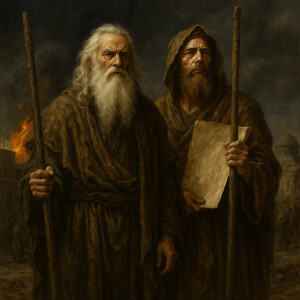
We flush out and reinforce our timelines and who the end-time players are. If you're still scratching your head after this podcast, read the notes!
NOTES TO END TIMES PLAYERS
Saturday May 10, 2025
Saturday May 10, 2025
Revelation
Between the 6th and 7th Trumpets, we encounter a deeply rich segment in Revelation. The source material, " Between the Trumpets—Prelude to the Final Wrath," digs into this section in great detail. If one is to understand Revelation, this is a great place to spend some time. It is here that we begin to see Earth and Heaven converging. Don't blink, or you could miss it!
Notes to Between the Trumpets
Saturday May 10, 2025
Saturday May 10, 2025
Revelation
The last seal moves us into the Trumpets. Perhaps you've wondered why we structured the podcast like this. The case we want to make is that the opening of the 7th seal launches a series of events on earth that are the direct wrath of God. It is not a subtle comment that those on earth are unrepentant. This is just another clue that the rapture has already happened. We like pointing this out. Let me take you back to Genesis 18:32. God responded to Lot's question about whether he would destroy the city if there were 10 righteous.
Gen 18:22 Then he said, “May the Lord not be angry, but let me speak just once more. What if only ten can be found there?” He answered, “For the sake of ten, I will not destroy it.”
God is unchanging. We should not expect anything different here. This, perhaps, will help you understand why those left on earth are unrepentant.
Notes for The First Six Trumpets Sound
Thursday May 08, 2025
Thursday May 08, 2025
Ok, sink your teeth into this. For me, when the reading is difficult, I tend to skim over it and go to more understandable passages. I think that's our nature. But I kept looking at this and thinking, this is deep... DEEP. So today, we unpack Daniel 9:27. I wasn't sure where we were going, but where we ended up is indeed profound! You can see the ENTIRE New Testament written here. That doesn't mean you can close up shop and go home! Re-read Daniel 9:27, and if you're like me, the questions come flying off the page. And the answers are all there in the New Testament!
Notes to Daniel 9:27
Thursday May 08, 2025
Thursday May 08, 2025
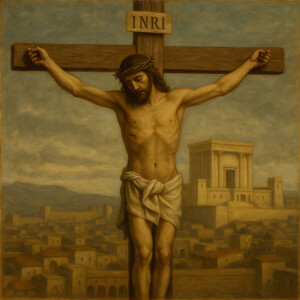
Ok we got a lot of pushback on the idea that The Cross is The Abomination That Causes Desolation that Daniel is referencing in Daniel 9:24-27. I get it! It was a jarring thought to me too but stick with me. This podcast flushes out the meaning and the biblical patterns of this concept. If you understand how this applies to the cross, you'll have a much deeper, theological understanding of what actually happened on the cross!
Notes to The Abomination That Causes Desolation

Wednesday May 07, 2025
Wednesday May 07, 2025
I have been tempted to do this! I've even been on the other side and watching rapture dates come and go. We dug into this a little bit more and came up with this cool concept that lets you really focus on the events but not the dates. If you follow us, you'll never have to worry about "when" again. You'll be able to rest in the comfort of knowing that you're ready - whenever "it" happens!
Notes on Setting Prophetic Dates
Wednesday May 07, 2025
Wednesday May 07, 2025
Revelation
Whoa!!! We do not take this lightly! We are tossing out classic interpretive dogma about the end times and reading Daniel closely and then harmonizing Daniel's timeline with the New Testament. The result is a more cohesive and consistent interpretation. What if I told you that there is no requirement to rebuild the Jewish temple. What if I told you that there is no 7-year peace deal offered by the coming antichrist. If you are looking for those two signs (very common), you might be missing what scripture is actually telling you and worse, you might be missing what has ALREADY happened. Stick with us and see if this makes sense!
NOTES for Harmonizing Daniel with the New Testament
Tuesday May 06, 2025
Tuesday May 06, 2025
Revelation Series >> Daniel 9:24-27
Most interpretations get Daniel 9: 24-27 wrong (IMHO). We have mapped Daniels prophecy to the ministry of Christ and the results are stunningly accurate. If you're following on with our Revelation series, what we've done here is correct the traditional 7-year interpretation of end times that is just flat out wrong! We even account for the gaps (i.e. the Church Age).
Notes to Daniels 7th Week Prophecy

Tuesday May 06, 2025
Tuesday May 06, 2025
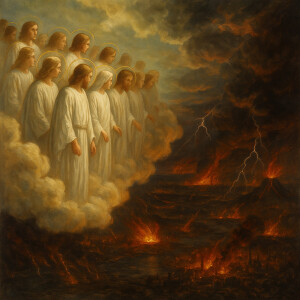
The traditional interpretation of Matthew projects it onto the last 3.5 year timeline. This perhaps is why many arrive at a Post Wrath Rapture. But tossing aside pre-conceived notions, Matthew 24 overlays on top of the first 6 seals in Revelation PERFECTLY. Read this chapter again with fresh eyes! The parables supporting this also indicate that Jesus is talking about a Rapture event - not a Wrath event!
Notes: Matthew 24 - a Rescue Story
Sunday May 04, 2025
Sunday May 04, 2025
Revelation
We've spent a lot of time on this because ONE: I don't want to mislead anybody and TWO: I don't want to be there during the wrath! What I don't ever want to do when I read the Bible is start with the answer. That's like leading the witness. We've checked the entire Bible and God unfailingly protects his chosen from wrath. Revelation is no exception and we even find deeper clues within the context itself.
Notes for Rapture Before the Wrath
Note: I plan to come back to this later. Over the course of my Bible study, my view of Rapture has matured along with my discernment. I've left this study here because it is credible by some interprative windows. Ultimately and simply, if you learn the difference between tribulation and wrath, you will have an amazing foundation with which to read passages involving rapture.
Sunday May 04, 2025
Sunday May 04, 2025
Revelation
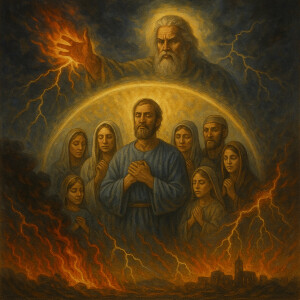
The more I read and understand Revelation, the more I see God's grace. We started the research for this episode looking for evidence of a Pre-wrath rapture. What we discovered was far more. Revelation exemplifies God's mercy and grace over and over again. He is practically pleading for people to listen to him!
In the process, we did find definite clues supporting a pre-wrath rapture.
Notes on Patterns of Mercy - Revelation Rescues
Saturday May 03, 2025
Saturday May 03, 2025
Revelation
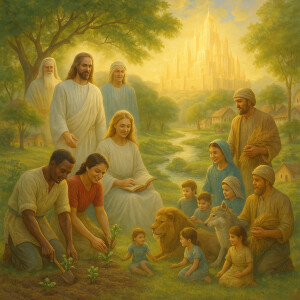
Oh boy do I want to be here! This podcast and the notes explore what life is like in the Millennium Kingdom. If you never had a goal for your life, let this be your goal.
Living in the Millennium Notes
Friday May 02, 2025
Friday May 02, 2025
Psalms - Forgiveness
I'm just stepping away a little bit here. We'll continue with our Revelation series but as I was journaling and thinking today, this popped into my head. I'm not a person to let things get to me and maybe that is a bit of a defensive posture - don't know. But if you're one to hang on to grudges or even just fist pump (or worse) that guy that cuts you off on the highway, just rest with this. I'm included my notes for this but also pulled out the main part so you can just read my personal reflection on the subject.
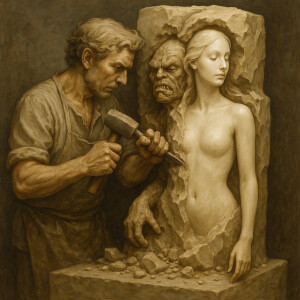
Editing The SoulGod does not look at us and see failure.He sees design obscured by damage,intention buried beneath rebellion,light dimmed—but not extinguished.Forgiveness is not forgetfulness.It is precision. It is surgery.It is the careful hand of a Creatortracing the lines of His original imageand cutting away everything that doesn't belong.Forgiveness is God’s visual scalpel—sharp enough to separate sin from soul,merciful enough to spare what is sacred,loving enough to see what still remains.And when we forgive,we do the same:we look through the lens of grace,to see the good beneath,and choose to see what God sees.
- Greg Newell
Notes: Reflections on the Nature of Forgiveness

Friday May 02, 2025
Friday May 02, 2025
Revelation 1-7
We introduced a paradigm shift in the definition of "the great tribulation". Reading Revelation through this lens offers a clear, linear understanding of the text and the sequence of events. I (Greg Newell, the author), am 100% convinced that "the great tribulation" that the elder explains to John is the raptured multitudes from the church age. Reading Revelation 1-7 in this context is clear, linear and understandable. We don't have to guess about what goes where. We don't have to think about pre-trib, mid-trib, post-trib. Just read the chapters with this (I think) much better understanding of "the great tribulation" and see what you think.
Notes for Before the Wrath - Rereading Revelation 1-7
Friday May 02, 2025
Friday May 02, 2025
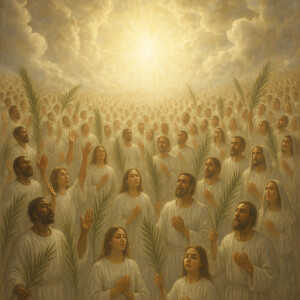
Revelation 7:14 And I said unto him, Sir, thou knowest. And he said to me, These are they which came out of great tribulation, and have washed their robes, and made them white in the blood of the Lamb.
If you're read anything about end times, it's likely you conflate "The Great Tribulation" as that last 3.5 year period where all literal Hell breaks loose on earth. I think we've been dogmatized! Changing your understanding of this phrase opens Revelation in a whole new way. The first 8 Chapters of Revelation, with this new understanding, can be read in a clear, cohesive framework that doesn't leave you guessing.
Note for Redefining the Great Tribulation

Thursday May 01, 2025
Thursday May 01, 2025
- Revelation -
Whoa! Sorry, my last notes were 90 pages! There is a timeline in there, but we definitely went down some rabbit holes (worth looking at). Today, we just want to focus a little more on the timeline. A LOT of folks are confused over the 3.5 vs 7-year tribulation. If you listen to social media, it just adds to the confusion. Hopefully, this podcast will help you remove the confusion, and you'll see a very clear timeline. Why is this important? It will help improve the clarity with which you read Revelation. Knowing the timeline is like knowing the destination before you look at the map.
Clearing up the Revelation Timeline Notes
[if notes link is not active, click the episode link to download]
Wednesday Apr 30, 2025
Wednesday Apr 30, 2025
I defy anyone to read through Revelation once and just "get it". I'm almost a month into this study and it has taken quite a bit of back and forth and many rabbit holes. I had to step back and away, let it sit, come back and just rest with Revelation on the brain for a while. If anything, I'm learning the value of letting the Bible speak and not to force it.
If you're like me, you might be listening to a lot of theories about when things are supposed to happen. In the context of Revelation, let me break it down as clearly as I can (downloading the notes is useful).
Church Age
Birth Pangs
Great Tribulation (3.5-year period)
Christ's Return
Millenium
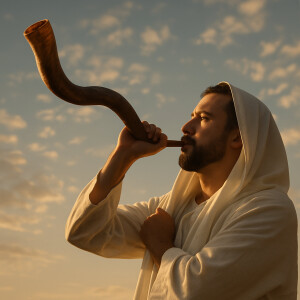
If you get this timeline straight, reading Revelation will make a lot more sense. And, oh yeah, we don't skip the Rapture! We don't nail down a date (sorry). I think we came up with a better idea! Definitely download the notes on this. We do make some assumptions, but I think it's a strong one. Rapture is pictured by the Feast of Trumpets. Instead of choosing a date though, let's create a celebration movement for the Feast of Trumpets! This doesn't have to be just a Jewish holiday! I develop a plan for this in the notes. I could use some help! If you're interested email rabbitholes.faith@gmail.com and let's get a movement going!
NOTES for Revelation Timeline
[if notes link is not active, see episode link}

Saturday Apr 26, 2025
Saturday Apr 26, 2025
So, in case you're not familiar, AI software can now listen to a conversation and regurgitate a summary that captures the conversation. It's like a book report for a conversation. We use "Fathom.AI" in our Zoom meeting discussions but there is other software as will.
In any case, we sat as a fly on the wall to listen to this conversation. And rather than post the entire conversation (which drifted off in the weeds quite a bit), we did an A.I. summary of that conversation which is what we've posted here as "The Gathering Storm".
The Gathering Storm Notes

Saturday Apr 26, 2025
Saturday Apr 26, 2025
There's a history of Enoch that I don't plan to go into. What I will say is this. Scripture quotes Enoch. That's enough for me to study it. For myself, I'm curious ONLY in the Enochian literature written before the 1st century. That is: First Enoch. We approach Enoch with reverence and respect. We are still in our Revelation studies and Enoch seems a natural fit. It contains unique material about the origins of evil, angelic hierarchies, and the final fate of the wicked and righteous. In some cases, Enoch may even fill some gaps we have in our understanding.
This first podcast is a slow entry. Just cracking the door. You will definitely want to read the notes. We published the exact conversation with A.I. to help us read and understand the first four sections of Enoch (plus the first paragraph of section 5). We didn't just read it.. we tried to fill in the gaps! I actually think we did a pretty good job.
This podcast highlights the nature of that interaction and touches on the subject matter as we approach the very beginning of Enoch.
NOTES TO Wading into Enoch - Filling in the Gaps
Friday Apr 25, 2025
Friday Apr 25, 2025
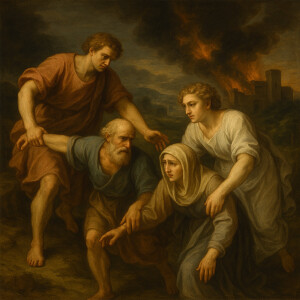
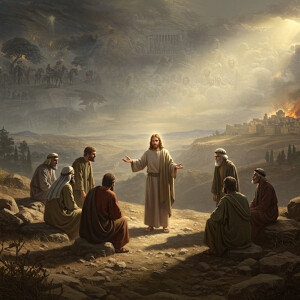
People listening to my podcast, especially as I'm going through Revelation, why a keep coming back to Rapture. Rapture is a nightmare for the unrighteous. Rapture theology is resting in the comfort that no matter how it happens, God has got you. I'm not so concerned about the timing, though my hope is before all literal hell breaks loose. But no matter what, or when, we can rest in the comfort of knowing that "God has not destined us for wrath..."
Sodom and Gomorrah - Rapture Parallel - Notes
Friday Apr 25, 2025
Friday Apr 25, 2025
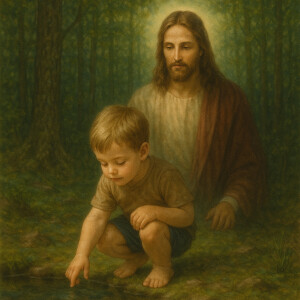
You need the Gospels to help interpret Revelation. Jesus helps!
Notes on Jesus and Revelation - End Times Parallels
Monday Apr 21, 2025
Monday Apr 21, 2025
I'm not going away but today I had to pull back a little bit. I've included my journal notes if you care to read. Sometimes as we dig deep into scripture, we lose our connection with the reason those words are even on the page. As you may have surmised by now, this isn't just a podcast... but a personal journey through scripture. So this podcast gets a little more personal.
Notes

Sunday Apr 20, 2025
Sunday Apr 20, 2025
We stepped back to take another look at the 6th seal and realized that we were seeing a big picture emerge. Everything that happens on earth is described in the seals. The 6th seemed out of place until we realized it shows natural events like earthquakes and volcanos that are not under the control of man. That allowed another look at seal 7 and 8 through the same lens. Altogether we have Man, the spiritual realm, the environment and God all playing a role - both historically and right up to the end.
I'm a deep dive kind of person. I want to know stuff and as soon as I learn it, I want to show it to other people. Some people don't need the details, and I have to respect that. Actually, I really respect that. Those people can look at all these rabbit holes I go down and just say "I have faith that God will carry me through; I don't need to know the details of how he does it."
Honestly, I don't think I need to know the details either. I LIKE knowing the details. It deepens my faith in understanding. It increases the awe and the reverence I have for this miracle we hold in our hands. In the end, it may be a distinction without a difference, right? At the end of the day, we both get saved.
But still, if you just want the big picture of the 7 seals in revelation it's this: The scroll with the 7 seals is in the hand of Jesus. And perhaps the only question you need to ask comes from Chapter 7 (before the 7th seal is opened). Are you sealed?
Notes>> Zooming out on the 7 Seals of Revelation
[If link to notes is not active, click episode link]
Saturday Apr 19, 2025
Saturday Apr 19, 2025
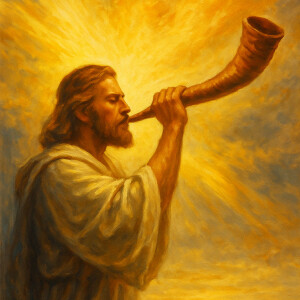
I was always confused by: First Corinthians 15:52 - In a moment, in the twinkling of an eye, at the last trump: for the trumpet shall sound, and the dead shall be raised incorruptible, and we shall be changed.
This is an easy trap to fall into when doing end times / Revelation studies. I thought that last trumpet was the 7th Trumpet in Revelation. It was both confusing and frankly a little scary to think about! But in our last deep dive - we found something that made better sense in the context of who Paul was (a Pharisee deeply rooted in Jewish tradition).
Notes to the Last Trumpet
Saturday Apr 19, 2025
Saturday Apr 19, 2025
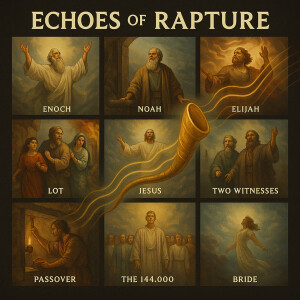
“It is the glory of God to conceal a thing: but the honor of kings is to search out a matter.” Some things are hidden in plain sight. To deny that the rapture is a "thing" is to deny biblical history. We explore that in this podcast. Again, our goal is to picture revelation with resolve and comfort, not with anxiety and foreboding. Everything important in the Bible has echoes. Let's listen to the echoes.
Notes to Echoes of the Rapture
[If link is not active, click the episode link to access the notes]

Saturday Apr 19, 2025
Saturday Apr 19, 2025
Revelation 8
We've walked through the first 6 seals. If you are alive during this time period, where are you watching these events unfold? Those are the questions I ask as fire, hail and blood begin to rain down on the planet... and this is only the first trumpet!
Notes: Breaking the 7th Seal and Blowing the First Trumpet
Thursday Apr 17, 2025
Thursday Apr 17, 2025
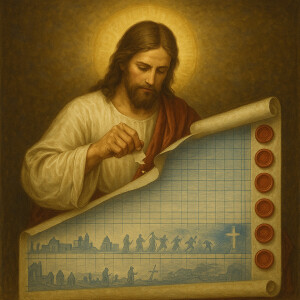
For me... reading Revelation has been a profound experience. One doesn't just read it like a chapter in Tom Sawyer, you have to go back and unpeel the layers and the images and the symbolism. But when it unfolds it's beautiful.
I can't describe fully how comforting it is having gone through this process. From Chapter 1 through chapter 7, if you read it and understand what is before you, that's all you need to know! Seriously! It's all there in a very big picture format.
Remember, the scroll with these seven seals has been here since the beginning. We were waiting for Jesus to arrive to be able to open it. The seals clearly have a historical context, and I was tempted to stop with the history and move on to End Times after seal 4 - but after reading and re-reading, I'm seeing that these seals cover The ENTIRE BIBLICAL STORY!
As I was reading, I was weighed down by interpretations that didn't sit right with me... but I was accepting them because I had no better interpretation. Then, well, you keep going! You wrestle with the text and the context and if you pay close enough attention, it all comes out plain as day.
This podcast will walk you through that. Ultimately the message is - Don't skip over or skim the first seven chapters. I know, you want to get to the epic center but quite honestly, if you believe what's about to unravel, you'll want to know from where you'll be watching it unfold. And you'll want to rest in the comfort of knowing.
Notes for Rev 1-7 - and the Unveiling of the Blueprint
Monday Apr 14, 2025
Monday Apr 14, 2025
We take a little bit of break, if you want to call it that : )
Ever read Ecclesiastes and think to yourself, what has vanity got to do with it?
By taking that word and replacing it with the word "madness", Ecclesiastes comes to life. When I did this, I remembered another piece of literature (made into a movie) - Man of La Mancha. There's a scene that I've pulled the YouTube clip from: https://youtu.be/MhE7xY6r9pM?si=fH0mjMzfF0iTj7OH
Here are my notes associated with the podcast discussion: Madness Notes

Sunday Apr 13, 2025
Sunday Apr 13, 2025
Before you start sending me all kinds of hate mail... I love the United States and what it has stood for (that past tense phrasing is very deliberate). I do not think the United States stands on these founding principles any longer. Our leaders take an oath to uphold the constitution, and I could write books about how they take that oath with a grain of salt. Once in power, our Constitution is only given consideration when it can be used as a club. The founding principles have been perverted and usurped... look no further than the principle of Separation of Church and State. These guys said it better than I ever could - I just happen to be a first-hand witness.
"Our Constitution was made only for a moral and religious people. It is wholly inadequate to the government of any other." - John Adams
"Of all the dispositions and habits which lead to political prosperity, religion and morality are indispensable supports." - George Washington
"Only a virtuous people are capable of freedom. As nations become corrupt and vicious, they have more need of masters." - Benjamin Franklin
"God who gave us life gave us liberty. And can the liberties of a nation be thought secure when we have removed their only firm basis — a conviction in the minds of the people that these liberties are the gift of God?" - Thomas Jefferson
"It is when a people forget God, that tyrants forge their chains." - Patrick Henry
"A general dissolution of principles and manners will more surely overthrow the liberties of America than the whole force of the common enemy." - Samual Adams
"If we and our posterity reject religious instruction and authority... no man can tell how sudden a catastrophe may overwhelm us and bury all our glory in profound obscurity." - Daniel Webster
Notes on the Four Horses and the United States

Sunday Apr 13, 2025
Sunday Apr 13, 2025
Let's step back. We covered the letters to the 7 churches. From there we jumped to the Throne Room of Heaven and became awestruck by God Himself. Then we jumped to the Vision of the Lamb. There is something in Chapter 4 and 5 that is right in front of you. It's worth re-reading those chapters again and just start asking questions, line by line. Wait, what? Who are those elders? And how did they get here? That's what we're unpacking today. This is the best Easter message I could have given anybody... Happy Easter!
Notes to: The Rapture, Did You Miss It?
NOTE ON RAPTURE TIMEING: Much of this discussion is used by Pre-tribulation Rapture theorists. In my studies and deep dives, I'm NOT a pre-tribulation rapture guy! If you want a more grounded view of Rapture timing, check this out: https://www.rabbitholesandmeditations.com/why-am-i-still-here/

Friday Apr 11, 2025
Friday Apr 11, 2025
REVELATION 6:1-8
We've dug deep into the 4 horses of the apocalypse. We've seen the natural progression of the white horse to the red horse, to the black horse and ultimately to the pale horse. We've seen this play out in history over and over again. Chapter 6 of revelation is setting you up for the final stage - the cycle happens on a global scale. Put the bad guy on the white horse, on the global stage. I think you get it.
Notes for: "A Bad Guy on a White Horse"
[If Notes link is not active, see episode link]

Friday Apr 11, 2025
Friday Apr 11, 2025
REVELATION 6:1-8
Once the rider on the red horse has gained complete control, then comes the downward spiral. This isn't just hyperbole', it happens every time.
Notes to the article: From Red to Black to Dead
[if the link to the notes is not active, please click the episode link to access]
Friday Apr 11, 2025
Friday Apr 11, 2025
REVELATION 6:1-8
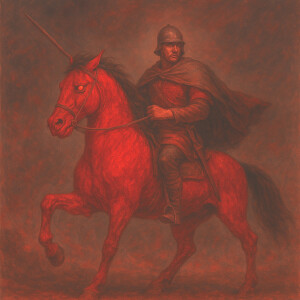
History is rife with the white horse ruler paving the way for the red horse. It doesn't even matter if the guy riding the white horse is a good guy, righteous even! The horse leads the way. We see spiritual warfare playing out on the human stage. The white horse always seems to give way to the red horse? But how? That's where we go in this podcast.
Enter the White Horse - Notes
[If the link above is not active, click the episode link to access]

Thursday Apr 10, 2025
Thursday Apr 10, 2025
REVELATION 6:1-8
Last time we focused on the horse, the "system" and its inevitably inherent flaws. Now we focus on what a righteous ruler looks like in a sinful world (our world). In other words, without the horses - without that spiritual element that undermines the systems.
If you follow this dialog, you'll clearly see the need for Revelation. And hopefully, you'll begin to see the hope and the wonder. We want you to look at Revelation with wanton eyes... not worried about the epic nature of what is required to get through it. That's for Hollywood. We're focused on the hope!
Righteous Rulers in an Unrighteous World Conversation and Notes
[if link above is not active, see the episode link in your podcast app]

Thursday Apr 10, 2025
Thursday Apr 10, 2025
REVELATION 6:1-8
Sometimes "stupid questions" lead to profound answers. Have you ever thought about this? Does the rider on the white horse always have evil intentions? The answer to the question too me down this rabbit hole. It's not about the rider! It's the horse! Yes, we are broken people and the Rider himself doesn't have a chance in this world, without the saving grace of Christ. We elect people who we think are the best for the job. Not perfect but they are not evil. They might even be God-fearing, Christ-Loving people. Jimmy Carter certainly fits that bill - and he was a disaster for the country. So is it about the righteousness of the rider that we seem to be focused on?
NO! IT'S THE HORSE!
Discussion Notes for It's The Horse
[If the notes link is not active, see the Episode link to access the notes]

Wednesday Apr 09, 2025
Wednesday Apr 09, 2025
John 12: 12-19 | John 13-17 | John 18 - 19
Ever wonder how they cram 3 days and 3 nights between Friday and Sunday. Maybe the timeline is wrong. Here's a revised timeline and the document to back it up that shows a timeline that not only fulfills this prophecy but carries a lot more weight and meaning to the crucifixion.
The Passion Week Timeline
Wednesday Apr 09, 2025
Wednesday Apr 09, 2025
REVELATION 6:1-8
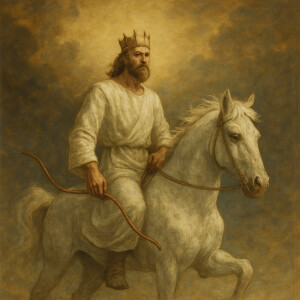
This will make you think about your own political leaders, no matter what country you hail from. What happens when the White Horse Rider of Revelation 6 comes onto the stage. How has that reverberated throughout history? We are NOT looking for an Anti-Christ, we are looking for a pattern! and the pattern is stark, sobering and eye opening. Hopefully this gets you thinking, not necessarily about your own political alignment - but the bigger picture. Pul your attention back, maybe even swallow some humility (so you don't come out with fists pumping!) and look at the big picture.
The White Horse Rider - Notes
[If the link above is not active, click on the Episode link in your podcast app to download the notes to this Podcast]

Wednesday Apr 09, 2025
Wednesday Apr 09, 2025
REVELATION 6:1-8
This episode covers all 4 seals in Revelation 6. However, the deeper I got into this, the more I want to slow down. So, consider this episode as a good lead into each of the first four seals. We're going to break it down even further in the next four episodes, take our time, and really flush this out.
The First Four Seals - NOTES - Revelation 6
[If the link above is not active, see the Episode link in your podcast app.]

Tuesday Apr 08, 2025
Tuesday Apr 08, 2025
Revelation 5
Revelation, chapter 5 is my favorite chapter in all the Bible. Do NOT blow past this. Rest on it. Try to walk with John and see what he is seeing - try to feel what he is feeling. This podcast doesn't even come close to what I felt as I was creating the notes for this.
The Lamb - Revelation 5 - Notes
If the link to the notes is not active, see the Episode link.
Monday Apr 07, 2025
Monday Apr 07, 2025
We are moving away from the letters to the Churches and we wanted to sit on Revelation Chapter 4 for a bit. Our goal here is not to inject interpretations that are not really spelled out in the text. Just take in the majesty of the moment and reflect a bit. Today's podcast doesn't get too heavy... we just walk through slowly.
Revelation Chapter 4 Notes

Saturday Apr 05, 2025
Saturday Apr 05, 2025
I've read the final chapterGod wins!
Seen the tee-shirt? This podcast takes you there. Cutting through the drama of revelation, we move forward with Jesus and His promises. If you know the end of your journey, you'll have a much better perspective on the journey. This is one of the few times where knowing the ending makes the book better!
Notes to The Promise of Revelation
If the link above is not active, click the episode link and you can download notes there.

Saturday Apr 05, 2025
Saturday Apr 05, 2025
Not only do I produce podcasts, I write music (with the help of A.I.). I don't know if this song will resonate with you, I hope in some way it connects. For me, this is another form of prayer. I have to sit and think about the words and what I want to say until I'm finally happy with the message. The beauty for me is that I get to capture that in a sort of time capsule that I can go back and listen too.
https://www.youtube.com/channel/UCVfusUVLeZEzHg9KJZlDeZQ
Saturday Apr 05, 2025
Saturday Apr 05, 2025
I'm a pretty black and white kind of person. This letter speaks to me. Have you ever talked with someone who is so careful in his words, so as not to offend anyone, that his entire message gets diluted in his desire to be neutral? That kind of person never sits right with me, you never really know what they think!
I think Jesus is speaking to Laodicea in this very context. They are lukewarm. They hold no real convictions. They are happy, comfortable and complacent. In that culture, they do not want to rock the boat - it might mean that they could be stripped of some of their self-sufficiency - their comfort.
I think we in the west are floating in the same boat! We don't even recognize how well we have it. BUT, beyond just wealth and material possessions, our culture has washed everything down to a diluted average. Say anything and you offend somebody. As we all walk our politically correct straight lines, I think we have to step off, find our clear path in Christ, and speak it boldly. You may offend someone... no... you WILL offend someone. Because today, someone, somewhere is offended by anyone speaking with clear conviction, clear beliefs and even a clear faith that is different from their own.
Notes For the Letter to Laodicea
[If the link above to the notes is not active, please click the Episode Link and download from there.]

Friday Apr 04, 2025
Friday Apr 04, 2025
Short letter, long podcast! Jesus loved Philadelphia and we dig deep to understand what is not obvious when you just skim the surface. Remember, Philadelphia, culturally is not all that different from the other churches and cities. Yet, they were able to maintain a steadfast and undeniable faith in an otherwise hostile environment. What's interesting (at least to me) is there is something beautiful about modeling the Philadelphians. We don't have to go as far as the Amish (who definitely set themselves apart), but there is something to be said for minimizing, eliminating your distractions, keeping things simple and becoming uniquely useful within your local community - apart from the work, job, world stuff you're caught up in.
Notes for The Letter to Philadelphia << -- If link is not active, click Episode link
Thursday Apr 03, 2025
Thursday Apr 03, 2025
You might dismiss this letter thinking well that was then, this is now. That doesn't happen anymore. Really? When you step back and look at what your church tolerates, you may find Jezebel running rampant.
The letter to Thyatira is a stark wake up call. Jezebel is alive and thriving.
Notes for the Letter to Thyatira

Thursday Apr 03, 2025
Thursday Apr 03, 2025
We're jumping off the Revelation series today... but this is entirely relevant to Revelation.
Here's the video that sparks this warning: https://youtu.be/hnIq_aC_-p0?si=duvvxn3hFb80_mTF
Julia McCoy presents an interesting if not optimistic view of AI technology based on a prediction by Elon Musk "there's an 80% chance AI will create unprecedented abundance by 2040". The video goes on to suggest the point at which AI passes human intelligence will be around 2030.
While I don't doubt the prediction, I have a lot of issue with how Julia is positioning this as she masterfully, if not erroneously, uses scripture to support her points!
THIS IS A WARNING. BE DISCERNING and VIGILENT.
the Article - As It Was In The Days of Noah, by Greg Newell Takes this video head on.

Wednesday Apr 02, 2025
Wednesday Apr 02, 2025
I spent a lot of time in this, even though it is quite a short letter. Perhaps, because I think about this every time I pass by a church and notice an empty parking lot... sometimes even on Sunday mornings! Of all the letters, one can blow by this one so easily yet it reflects a lot of our churches today. I hope this truly resonates with you, the individual church goer or especially if you're a church leader.
Me? I'm just one of those people in the hallway. This podcast is a way for me to dig deep into scripture, to carry the torch in some way. But what I think we're missing is spelled out so clearly in this letter. We have included our worship in our week, like it's a checkmark in our to-do list (and many not even that). These empty buildings could be sooo much more!
NOTES For the Letter to the Church of Sardis
Tuesday Apr 01, 2025
Tuesday Apr 01, 2025
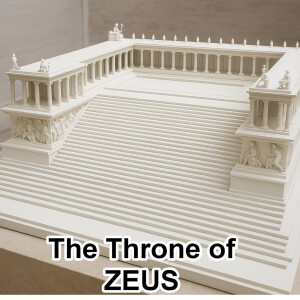
Christianity is a miracle! When you dig deep into the backdrop of the cultures where Christianity was introduced, you see everything against it! The existing spiritual practices, the pagan religions, the state, the economy and even the Jews!
Pergamum is no exception. Once you see who they are and what they had to deal with, you can understand why Christ had to rebuke them for compromising on their faith.
And lest we think it was an issue for those way back then that we don't have to think about, THINK AGAIN.
You may see elements of compromise in your own church that Jesus talks about here. It's a sobering thought.
Notes for the Letter to the Church of Pergamum <<-- If this link is not active in your podcast app, use episode link.
Monday Mar 31, 2025
Monday Mar 31, 2025
When you dig into Smyrna what you'll find is evolution of Statism ideologies. Smyrna was told to resist, and boy did they! Wait until you hear about the story of Polycarp. It is a story that harkens back to epic Old Testament classics.
This is one of the shortest letters to the churches that has deep ideological repercussions even up to the present day and even into the later chapters of Revelation.
Notes for the Letter to the Church of Smyrna
Monday Mar 31, 2025
Monday Mar 31, 2025
We're going to address each church in separate podcasts. These letters should make you reflect on your own church and your own personal involvement with Christ and your church participation. These letters are both convicting and inspirational. In the source material, you'll find a quiz that will help you reflect and assess your situation and even your churches situation relative to what Jesus had to say to the Ephesians.
Letter to Church of Ephesia NOTES (see Episode Link if Notes link is not active)
Sunday Mar 30, 2025
Sunday Mar 30, 2025
Don't miss this! We often skim this chapter. There is so much here even the podcast doesn't do it justice. Feel free to download the notes. I asked and answered every question I could think of... from how John got to Patmos, why but for the grace of God he should never have made it to Patmos and even in his familiarity with Jesus, why John falls to the ground before the Almighty.
Notes: Revelation Chapter 1 << -- If link is not active, see Episode Link in your podcast app.
Sunday Mar 30, 2025
Sunday Mar 30, 2025
This podcast is an introduction to our next series, The Book of Revelation. We layout some groundwork, some assumptions. Stay tuned! This is going to be awesome!
Thursday Mar 27, 2025
Thursday Mar 27, 2025
I started thinking more deeply about the discovery under Giza and basically just came to the conclusion that this is just another story in the tapestry of the things that got us here! I think is fair to at least try to connect the pre-flood era to perhaps what the discoveries in Giza might represent. More importantly, does it change anything in our core beliefs as Christians. It shouldn't, but some will be challenged not just by this but by things on the technological horizon.
Hold fast to your core beliefs. I think things in the next couple of years are going to get crazy!
1 Timothy 4:1 (NIV): “The Spirit clearly says that in later times some will abandon the faith and follow deceiving spirits and things taught by demons.”
2 Thessalonians 2:9-10 (ESV): “The coming of the lawless one is by the activity of Satan with all power and false signs and wonders, and with all wicked deception for those who are perishing, because they refused to love the truth and so be saved.”
Link to Article: Beneath the Surface: Echoes of the Grand Delusion

Thursday Mar 27, 2025
Thursday Mar 27, 2025
News of new discoveries under Giza Pyramids, columns that go perhaps miles deep underground, has surfaced all over the web including Rogan's podcast, YouTube and everywhere else. There is a fascination that could have some deeper implications.
We take on this story and dig into what Egypt means to Christians. This is a fascinating deep dive and will lead us into the next Podcast that connects these ancient stories to End Times.
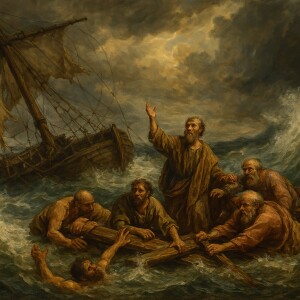
Thursday Mar 27, 2025
Thursday Mar 27, 2025
If you listened to the last podcast (Through the Wilderness), it dovetails nicely with Paul's last journey in Acts. Paul forges ahead on an epic adventure to get to Rome. This is quintessential Paul on his last physical journey in the Book of Acts. This also completes our podcast series on Acts. I'm not sure where we go next... but it's been a wild ride through Acts!

Thursday Mar 27, 2025
Thursday Mar 27, 2025
This is a commentary on a message delivered by Brian and Lauren Hinkle that I think can resonate with each of us. How do you deal with the hardships, the difficult times... those times where your only thought is "I need this to be over!"
We're almost finished Podcasting through Acts and I'm reminded of how Paul embraced his journey to bring the message of Jesus to the gentiles. Had not Paul suffered his own journey through the wilderness, I'm wondering if I'd be sitting here today with that message to embrace and to consider.
Brian and Lauren are church ministry leaders at the Miami Valley Church of Christ in Dayton Ohio - www.miamivalleychurch.org

Tuesday Mar 25, 2025
Tuesday Mar 25, 2025
If you've been following, we seen 3-4 rapture theories. They never sit right with me and I started asking some deeper questions. This production comes from trying to reconcile Old and New Testament prophecy with some brow raising questions we have to contend with:
We don't have a physical temple - how does the abomination of desecration play out.
NO WHERE in the New Testament is there mention of a 7-year tribulation! This is a stark contradiction to most end time revelation theories. I looked at the prophecies from Danial (the first 3.5 years) and guess what? They line up perfectly with Christ's ministry!
We also had to posit a theory for how the world would explain a rapture. People can't just return to normal after it happens and there would have to be some viable explanation. I've asked friends about this and the consensus was Alien Abduction. I didn't go with that theory because it doesn't really match up with something we have at our disposal (say if all this went down tomorrow!). So, I came up with CERN.
As we move forward from today, we all know that A.I., robotics, transhumanism are all becoming pretty viable so they make their way into a plausible End Times theory.
Ultimately, we created this theory and tested it against end times prophecy to make sure we didn't have any gaping holes. What you're about to hear, as far fetched as it sounds, is viable using the technology we have at our disposal today (perhaps even more so a year from now). A.I. is developing exponentially beyond our expectations.
I encourage you to question deeply. Do you own deep dives and maybe you can come up with something even more plausible. At the very least, you should find this episode thought provoking, if not, at least entertaining.
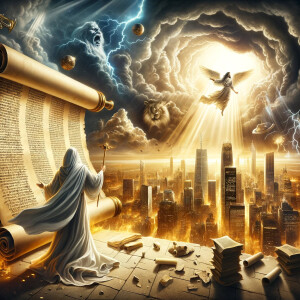
Tuesday Mar 25, 2025
Tuesday Mar 25, 2025
Think of this podcast as the cliff notes for the movie Prophetic Convergence (find it on YouTube). The reliability and accuracy of Bible Prophecy suggests (at least to me) that you cannot ignore what the Bible prophesies about end times. If, up to this point in history, the Bible has been right, why - all of sudden - would you think that it would get the next step in our future history wrong? Yet many people will ignore it.... Just as in the days of Noah.
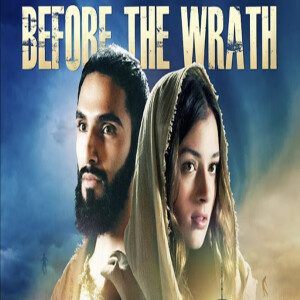
Tuesday Mar 25, 2025
Tuesday Mar 25, 2025
It's not often easy to pick up the meaning of what Jesus was saying. That has a lot to do with historical and cultural context. This movie is such a gem, I did not want to let it go until I went a little deeper.
Often, we get lost in the WHEN and don't understand the WHY. This movie will realign you with the message of Christ in an amazing and beautiful way. Share this with as many people as you can.
BEFORE THE WRATH - Search the movie available for free on YouTube.
https://youtu.be/rteKYDGPwzI?si=j99LopvzZJ174ivs
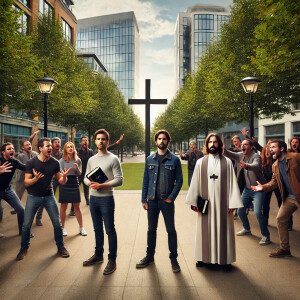
Tuesday Mar 25, 2025
Tuesday Mar 25, 2025
As I'm podcasting through Acts, it struck me how little has changed. Reflecting on the growing tensions in the world, it's interesting to see how people see Christianity as a threat. A whisper of Christianity in North Korea can get you into some serious trouble. Even here in the U.S., people want to marginalize Christians. It's fascinating (and disturbing to some). Honestly, in 2000 years... it seems that not a lot has changed really.
NOTES LINK<< See Episode link in your podcast app if this link is not active
Monday Mar 24, 2025
Monday Mar 24, 2025
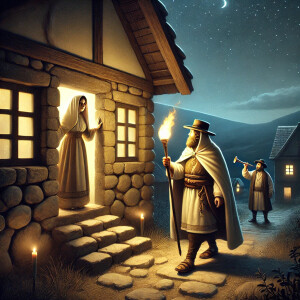
I know! I said not to sweat the rapture, but I can't leave it alone! I DON'T KNOW when or even "if" and the anticipation is killing me! It's like being a kid waiting for Christmas day! You remember that? When you stayed up all night because you couldn't sleep. That is EXACTLY how Christ said you should be for his return!
Jesus was well aware of Jewish tradition and there is no question he likened the church to his Bride.
If we are like the bride:
What Happens to the Bride Before a Jewish Wedding?
In ancient Jewish wedding customs, the bride (a picture of the Church) went through a specific process leading up to the wedding, which forms the beautiful prophetic backdrop for the Rapture:
1. Betrothal (Kiddushin)
The bride was legally pledged to the groom.
A covenant was made, often sealed with a cup of wine.
The groom would pay a price for her (called the mohar), symbolizing value and commitment.
Jesus paid a price for us—the bride of Christ—through His blood. (1 Corinthians 6:20)
2. Separation and Preparation
The groom would return to his father's house to prepare a place for the bride.
The bride would wait and prepare herself, not knowing the exact day of the wedding.
Jesus said: “I go to prepare a place for you... and will come again” (John 14:2–3)
The Church is now in this phase—betrothed, waiting, preparing.
3. The bride is taken
At an unexpected hour, the groom would come with a shout and a trumpet to retrieve the bride.
She would be snatched away to the groom’s house (often at night).
This is an unmistakable parallel to the Rapture:
“...with a shout, with the voice of the archangel, and with the trumpet of God…” (1 Thessalonians 4:16)
4. Wedding Ceremony (Nissuin)
The bride and groom would be hidden away for seven days.
Afterward, the marriage supper would be held—a time of joy and celebration with guests.
Many see this as symbolizing the Church being with Christ during the seven-year tribulation (hidden away), followed by the Marriage Supper of the Lamb (Revelation 19:7–9).
That said... the jury is still out on the rapture. Many of the weddings in the Bible did not wait the 7 days for the marriage feast. The tradition as Jesus would have understood it though, clearly is represented above. We can always hope.
If you want more clarity on this subject, check out Before the Wrath. It is a movie that is on YouTube. A friend of mine told me about it and it is absolutely, and starkly fascinating! It has me convinced of a Pre-Trib Rapture. We still don't know the date and you're not supposed to (that's in the movie as well). The movie is totally worth your time. https://youtu.be/rteKYDGPwzI?si=yRlsfAXTOl21D6Zk
NOTE: This podcast was a good example of getting caught up (no pun intended) in extra biblical documentation pointing to biblical events. I'm adding this note 10 months after this podcast. I love the picture of the wedding that this video depicts but we should not conflate it's meaning to actually what the bible says about Rapture. Specifically about rapture timing. I would recommend this to anyone who has listened to this Podcast ALSO listen to this: https://www.rabbitholesandmeditations.com/the-rapture-that-didnt-happen/
Sunday Mar 23, 2025
Sunday Mar 23, 2025
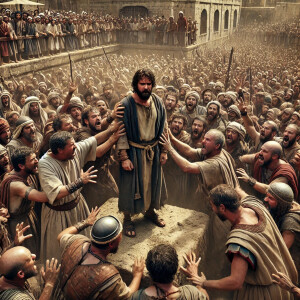
As we see Acts 21 and 22 unfold, I'm reminded that this is not a one off sort of event. The clash of religions, here between the Jews and the Gentiles, unfolds in history. It's amazing how much religious strife and friction has divided and shaped our world.
The Jews were chosen by God to be a light to the world. Clearly the Jews did not interpret this as their religion morphing into Christianity and being spread throughout the gentile world. We see Paul take his life into his own hands has he returns to Jerusalem - perhaps with a message of unity but ultimately that is not what was to transpire.
The Clash of Religions Notes << If link to notes is not active, See the episode link in your Podcast app.
Saturday Mar 22, 2025
Saturday Mar 22, 2025
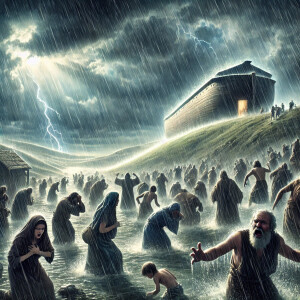
There are so many dates, so many interpretations. What does the text actually say? You don't really need to dig for it. 1 Thessalonians 4, Matthew 24, and Revelation 3:10 all hint at a rapture. BUT - interpretations abound and I think timing is always open to debate (my last podcast is an example).
Even Paul has to write another letter to the Thessalonians because there was so much confusion and false teaching about the Rapture ( 2 Thessalonians 3).
I LOVE revelation and Bible study on the subject. Revelation was the first book I ever studied deeply in the Bible.
But I think this: there is a danger in the hope of a date set in your heart for a pre-tribulation rapture (or even mid-tribulation). If that date comes and goes, what will you do? Many people - depending on their fortitude - will give up.
Here's where all this discussion starts: 1 Thessalonians 4: 16-17 - Read it on its face.
For the Lord himself shall descend from heaven with a shout, with the voice of the archangel, and with the trump of God: and the dead in Christ shall rise first:
Then we which are alive and remain shall be caught up [raptured] together with them in the clouds, to meet the Lord in the air: and so shall we ever be with the Lord.
... When I read the straight text, this seems to be an event that happens when Christ returns (Paul supports this in 2 TH 2)... not before. However, this scripture seems to specifically address the return of Christ. It is not a scripture debunking the pre-trib rapture theory if one reads the entire context carefully.
So, like most, I love the discussion. I present all the perspectives, but I rest in the idea that I will reign with Christ. How I get there is less important... as long as I am steadfast in my faith and ready always.
This podcast may be a sobering reminder to open your Bible more and depend less on the hype and more on the message.
Saturday Mar 22, 2025
Saturday Mar 22, 2025
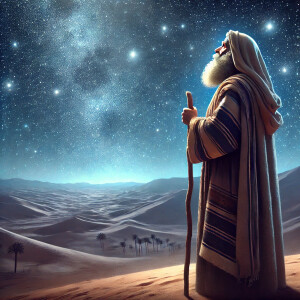
There is nothing more fun than watching an excited Christian explain something that he considers revelation.
I'm a little torn on the idea of predicting rapture dates. I err on the side of readiness. STILL - people that do this generally have a deep understanding of Scripture and are able to connect the dots you may not have considered. I don't trust the date but I love the pattern development done by Dr. Awe.
This PODCAST reviews a video by Dr. Barry Awe. It's fascinating, educational and if he's right, you better buckle up!
The YouTube Link to the Original Videohttps://youtu.be/wTW7NlJF7UU?si=U0tHbbvo_lcB5jiD
Further: See The Rapture that didn't happen! https://www.rabbitholesandmeditations.com/the-rapture-that-didnt-happen/
Saturday Mar 22, 2025
Saturday Mar 22, 2025
As I have dug deeper into scripture, I've heard all of the arguments of salvation by faith alone. If you go deep, this is a red herring and I think a very dangerous message!
Jesus commands Baptism.
For those who argue the Thief on the cross... Jesus was not dead yet!
For those who go to Ephesians 2:8 For by grace are ye saved through faith; and that not of yourselves: it is the gift of God.
That was the same Paul talking: whom Jesus commanded be baptized! Paul is speaking to the Ephesians who were all baptized!
Baptism is an act of your faith. If you believe in Jesus, then you will do as he commands.
This podcast digs deeper into why baptism is necessary. If you are still debating, dig deeper. Get baptized and I'll see you in heaven!
Baptism Notes << If link is not active, see Episode link in your Podcast App
Friday Mar 21, 2025
Friday Mar 21, 2025
In my research on Paul, I've found this thread of anti-Paul sentiment that can be a bit unnerving. What I didn't like, is many go with that gut-feeling without digging into the nature of Paul's (perhaps flawed) character. This Podcast flushes out those sentiments and helps put Paul into perspective as [yes] a flawed HUMAN and highly beneficial contributor to the Christian movement.
The "source" referenced in this commentary is ChatGPT (which I use quite often). I am the antagonist. I've posted the notes to the original conversation here. The Google Podcasters do a good job at trying to see both sides and flushing out why some people might be turned off by Paul.
Notes can be downloaded here: "Issues With Paul" << if the link is not active in your Podcasting app, click on the Podcast Episode link.
Thursday Mar 20, 2025
Thursday Mar 20, 2025
We have seen God working through Paul for quite some time. Let's take the time to recap his last 20-25 years. It's easy to blow through 20 chapters of Acts and not recognize that we are walking with Paul to bring the message of Christ to the world and that took a quarter of a century!
We see Paul still doing miracles in Acts 20 - it's become almost part of his everyday routine it seems.
We see the heart wrenching departure and his final words to the Elders of Ephesus.
We see what Jesus recognized in Paul - an amazing and dedicated leader who gave his heart and soul for the love of God and His Saviour.
If you can picture the last scenes of this chapter in your mind, meditate on them a bit, I doubt you can do it without shedding a tear for what Paul has done and is still yet to go through.
NOTES of ACTS 20 <<= Click Episode Link if this link is not active in your podcast app.

Wednesday Mar 19, 2025
Wednesday Mar 19, 2025
This podcast is a little different. It is a peak under the hood really. I don't want to pretend that this podcast is the definitive commentary on the Bible. It is not! If you're listening to this Podcast, you are seeing the answers to questions I have as I dig through the scripture. Sometimes the answers are not straightforward (like the whole dialogue with baptism). I use a number of resources. Several different Bibles with different commentaries; even a Septuagint Bible and of course online bibles. I use blueletterbible.org A LOT. Normally, I'll have ChatGPT pull up the scripture I'm studying and then as I read it, I ask the questions that pop into my mind. That is how I derive most of the content on this Podcast. The voice commentary is Google NotebookLM Sometimes they go off on their own tangents too. All output is reviewed and edited for accuracy (as well as I can define it) and conversational flow.
You, the listener, get the advantage of "listening in". I hope it sparks your own curiosity and there's nothing preventing you from taking the same path to understanding the Bible. I would highly recommend it.
For those of you skeptical about ChatGPT as a resource, consider one of the focused bible resources as an alternative. I can say that ChatGPT has not been bad. There are times where I'll get into an "argument" and while challenging, it is also fun (for me). Here are the direct - unedited excerpts that instigated this podcast so you get to see what the original conversation with ChatGPT looks like.
CHATGPT - ACTS19 Conversation <<- If the link is not active, go to the Episode Link in your Podcasting App
Tuesday Mar 18, 2025
Tuesday Mar 18, 2025
Paul goes to India? It fictitious of course, but what might it have been like? How would Paul approach the Indian culture? Acts provides all of the information we need... we don't have to guess.
To dig deeper into how this might have played out, check out the article: Paul Goes to India after listening to this Podcast > Paul Goes to India (or download using the Episode Link in your Podcast app)
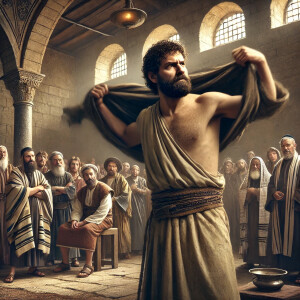
Tuesday Mar 18, 2025
Tuesday Mar 18, 2025
Acts 18: Christianity Meets the World! Paul is frustrated with the Jews and he moves on. God is with him all the way. As Christianity starts to explode, we see another problem. Factions! Acts 18 is a book worth meditating on. People constantly are asking: Am I in the right church? Does my church follow the true scripture? I personally am wrestling with these very issues. Ultimately, Paul gives the answer to this. We tackle this subject in this Podcast.
ACTS 18 NOTES - See Episode Link to Download
Monday Mar 17, 2025
Monday Mar 17, 2025
When you tip your green beer today, at least you'll know why!
What is the significance of the Shamrock? That Shamrock shake you're chugging at McDonalds has a deep meaning.
Let's connect the green to the meaning - it's a huge opportunity for discipleship!
NOTES: Beyond the Green Beer. See Episode link to download
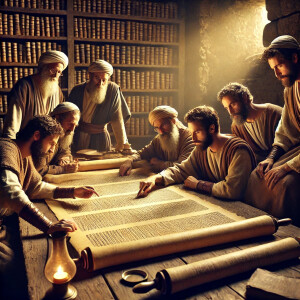
Monday Mar 17, 2025
Monday Mar 17, 2025
They didn't have the New Testament. They didn't have eyewitness experience. What the Bereans did have was a thirst for knowledge, a healthy dose of skepticism, and the need to know the truth!
Today, we have access to so much. Test what you are told by going back to the Word of God. I would challenge you to even test translations! DON'T TRUST CHATGPT. It's Ok to use ChapGPT for searches and information but always go back the scripture (Check out our podcasts on A.I. Bias). Sometimes, a message can lost, or washed out across translations. Logos apps or BlueLetterBible app can help you immensely here. You have access to so much more than the Bereans.
Notes: The Berean - Hear, Test, Believe

Rabbit Holes and Meditations
I am your quintessential conspiracy theorist. I don't believe anything without digging deep. I don't take anything for granted. I have to "know" something to believe it. I like to study it, mull it over, think about it, question it and learn from it. When I find a nugget, I love to share it.
I could have taken this podcast down so many paths, but the one I chose is the path I've always been on.
My life without God led me to God.
I generate these podcasts by conversing with AI systems. The ideas come from my natural need to know more. AI affords me access to resources to create deep, enriching answers to my questions.
One caveat: AI is fallable. There are even times when I'll release a podcast that I don't even agree with! The point is to get you to think and engage.
(note: references to things like "the excerpt and content" are simply because speakers are referencing a document I've put in front of them that is AI generated script with no real author. I created the idea for the podcast but AI scripted it.)
Because this is so important, I want to provide my own AI Prompt which you are free to use for your own AI Biblical Studies.
Bible Study AI Prompt
FINAL NOTE:
If you’ve made it this far, I want to speak to you plainly. I'm probably not a lot different than you. We're walking this road together.
The Bible says that every one of us has sinned — not just in our behavior, but in our hearts. Sin isn’t merely doing bad things; it’s living apart from God, rejecting His authority, and falling short of His glory (Romans 3:23). That sin brings judgment. Not just physical death, but eternal separation from God (Hebrews 9:27).
But the good news — the best news — is that God sent His Son, Jesus Christ, into the world to save sinners. He lived a sinless life. He died on a Roman cross. And He rose again on the third day. His death wasn’t symbolic — it was substitutionary. He took the wrath that sinners deserve, so that through Him, we might be forgiven.
Salvation is not earned. It’s not found in church attendance, moral effort, or spiritual feelings. It comes only by repenting of sin and trusting in Jesus Christ — crucified, risen, and reigning — as Lord and Savior.
If you’ve never done that, now is the time. Don’t delay. This isn’t about religion. It’s about your eternal soul.
If you’re unsure, wrestling, or have questions — reach out. Don’t walk away from the truth. Christ is calling. Respond to Him today.
I'm not a preacher, a prophet, or even a very good evangelist. I'm walking the same road as you. Still, if you need someone to listen to you, send me a note. Maybe I can help.
rabbitholes.faith@gmail.com